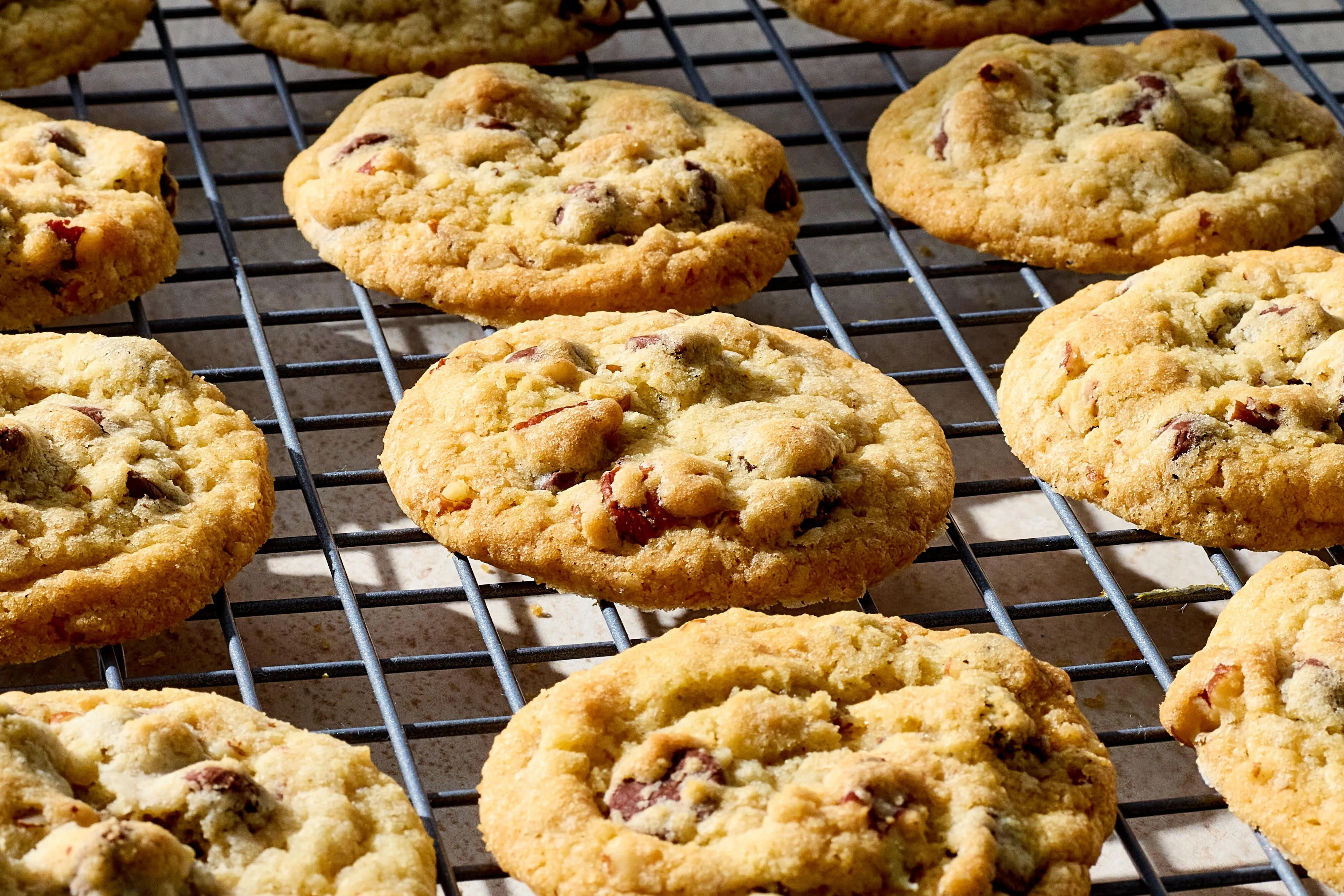
A great chocolate chip cookie is one of life’s greatest pleasures, and there are seemingly endless ways to improve upon the classic recipe. You can add brown butter for a complex nutty, caramel-like flavor, or shower the cookies with a dash of flaky sea salt after baking to balance the sweetness and add an extra crunch. For many bakers, chilling the cookie dough is a nonnegotiable step to reduce spreading and enhance flavor.
But have you ever considered what type of flour goes into your chocolate chip cookies? If you’re anything like us, you probably reach for all-purpose flour without thinking. While you can certainly make a delicious chocolate chip cookie with all-purpose flour, you might want to consider switching things up with bread flour in your next batch. Here, pro bakers Tessa Arias of Handle the Heat andBritney Brown-Chamberlain of Britney Breaks Bread explain why.
Never lose a BHG recipe again. Find a recipe you love on BHG.com? Click the heart icon to save it (and find it later) with MyRecipes.com.
What Is Bread Flour?
First things first—what makes bread flour different from all-purpose flour? As the name would imply, bread flour is designed for baking bread, as well as other forms of yeast-based baking such as pizza dough and bagels. Bread flour has a higher protein content—typically around 12 to 15%, compared to 9 to 12% in all-purpose flour—which produces more gluten and, in turn, results in a strong dough and chewy texture. “When combined with moisture and physically mixed into a dough, that extra protein helps form a stronger gluten network,” Arias says. “Gluten builds structure, affecting height and texture.”
What Does Bread Flour Do in a Chocolate Chip Cookie Recipe?
Bread flour’s high protein content make it well-suited for baking a loaf of sourdough or homemade pizza dough, but you shouldn’t stop there. As Arias and Brown-Chamberlain note, that high protein content also leads to chocolate chip cookies that are thicker and chewier than those made with all-purpose flour. While you don’t want quite as much gluten as bread dough, Brown-Chamberlain says, the extra gluten development is what gives cookies a chewy bite instead of a soft, cakey texture.
“The higher protein content creates more chewiness and elasticity in the cookie,” Brown-Chamberlain says. “With all-purpose flour, cookies tend to bake up softer and a little more delicate. But bread flour gives you that satisfying pull-apart texture without causing the cookie to collapse or break into crumbs. It also helps create a sturdier cookie overall, especially in recipes loaded with chocolate chunks or mix-ins. The cookie has more body to it instead of feeling super fragile or sandy. And honestly? That texture difference is huge.”
Should You Use Bread Flour in Chocolate Chip Cookies?
If you like a thick, chewy chocolate chip cookie, you should definitely try baking a batch with bread flour. Using bread flour won’t affect the flavor of the cookie, just the structure and texture. Brown-Chamberlain says that cookies made with bread flour feel chewier, thicker, and crisp on the edges with a soft middle—almost as if they came from a bakery.
“I love using bread flour in chocolate chip cookies because it gives the cookies a chewier, bakery-style texture that feels a little more elevated than your average homemade cookie,” Brown-Chamberlain says. “And I hate a flat, thin cookie—I’m all about thick, chewy cookies and bread flour delivers that every time. That extra gluten? That’s what creates those soft, chewy centers with slightly crisp edges. It also helps the cookies hold their shape better while baking, so instead of spreading into thin little pancakes, you get thicker cookies with more texture and structure.”
How to Use Bread Flour in Chocolate Chip Cookies
Ready to try using bread flour in a batch of chocolate chip cookies? If you’re following a recipe specifically developed with bread flour, Arias and Brown-Chamberlain say that you shouldn’t need to make adjustments to the other ingredients, as the recipe already takes the bread flour’s high protein content into account. If you’re subbing in bread flour in a recipe that calls for all-purpose flour, however, you might need to make some small tweaks. Since it has extra protein, bread flour absorbs more moisture than all-purpose flour, so you might need to add a little extra moisture to prevent the cookies from becoming too dry or tough. Brown-Chamberlain recommends adding an extra egg yolk, slightly more brown sugar, a touch more butter, or using less flour overall.
While you can usually make a 1:1 swap for all-purpose flour in a chocolate chip cookie recipe, both bakers recommend using a mix of all-purpose flour and bread flour instead.
“I usually prefer to use half all-purpose flour and half bread flour,” Arias says. “If we use only bread flour, the gluten network may become so strong that the cookie dough may dry out more easily, and the final texture may become rubbery instead of pleasantly chewy.”
“Combining bread flour with all-purpose flour gives you the best of both worlds,” Brown-Chamberlain adds. “You get the chewiness from the bread flour and the tenderness from the all-purpose flour. That combo creates cookies that are soft in the center, slightly crisp around the edges, and still melt in your mouth.”
- <span>Recipes & Cooking</span>
- <span>How to Cook</span>
- <span>How to Bake</span>