With several varieties of fruit and vegetable wash lining store shelves along with online DIY fruit wash methods (i.e. vinegar fruit wash, saltwater soaks, etc.), it's hard to know which to pick. But do you really need to be shelling out the cash for another cleaning product? Federal health officials report 48 million people become ill from foodborne illnesses every year, so it makes perfect sense to wonder whether your produce washing routine is truly getting rid of any potentially harmful bacteria. Fortunately, it turns out the answer isn't as complicated as you might think. We did some digging to learn what exactly is in a fruit and vegetable wash and got the details from a food safety expert on whether you should even use it.
Do You Need to Use a Fruit and Vegetable Wash?
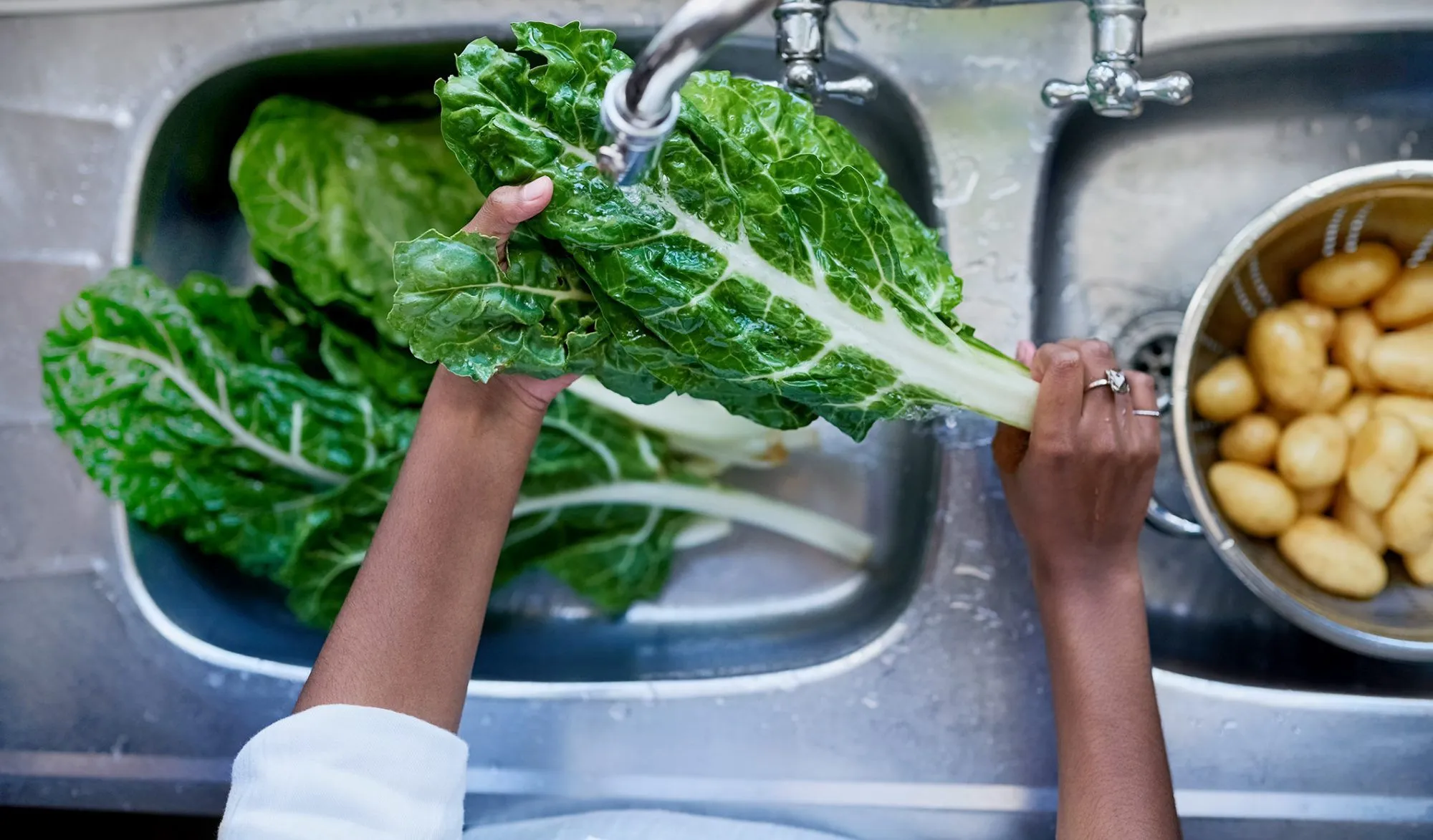
We all know it's important to take proper precautions when handling meat to prevent spreading bacteria, but it's equally as important to wash your fruits and veggies. The best way to wash fruits and vegetables? Plain old tap water. That's right, the FDA says it's OK to simply wash your produce with water. "Running water is just as effective as any veggie washes or vinegar solutions," says Shelley Feist, former executive director of the Partnership for Food Safety Education. The key there is running water (more on this below) and not using any soaps or non-food-safe cleaners.
A couple of produce-cleaning tips and reminders Feist wants you to remember:
- Always start with clean hands first before washing fruits or veggies.
- Rinse with running tap water and not standing water. "Even if it's in what you think is a clean sink," Feist notes. "With some produce, of course, it can affect the quality because it's going to absorb a lot of that water. It increases the possibility for contamination."
- Wait until right before you need the produce to wash it. This includes firm-skinned fruits and vegetables, too. Feist says some scientific research supports blotting or patting the produce dry to help reduce microbial loads.
Which Fruits and Vegetables are Most In Need of Washing?
Not all produce is the same in terms of how much they need to be cleaned.
According to experts, these are the "dirty dozen" that should be washed carefully before cooking and eating:
- Strawberries
- Spinach
- Kale, collard greens, and mustard greens
- Peaches
- Pears
- Nectarines
- Apples
- Grapes
- Bell peppers and hot peppers
- Cherries
- Blueberries
- Green beans
Experts say these "clean 15" are the fruits and vegetables with the least amount of pesticides and other contaminants:
- Avocados
- Sweet corn
- Pineapple
- Onions
- Papaya
- Sweet peas (frozen)
- Asparagus
- Honeydew melon
- Kiwi
- Cabbage
- Mushrooms
- Cantaloupe
- Sweet potatoes
- Watermelon
- Carrots
What Is Fruit and Vegetable Wash, Anyway?
What's in purchased fruit and vegetable wash depends on the brand, but common ingredients include a combination of water, vinegar, baking soda, glycerin (a natural compound from vegetable oils), and citrus oils. There are also several DIY fruit wash recipes on the web, with one of the most common being a mixture of water and distilled vinegar.
So while Feist says using fruit and vegetable wash is "certainly not harmful," there is no scientific evidence to show that it does a better job removing bacteria or contaminants. And to make sure you're preventing any food waste, be sure to store your fruits and veggies in the proper place so they'll last as long as possible.